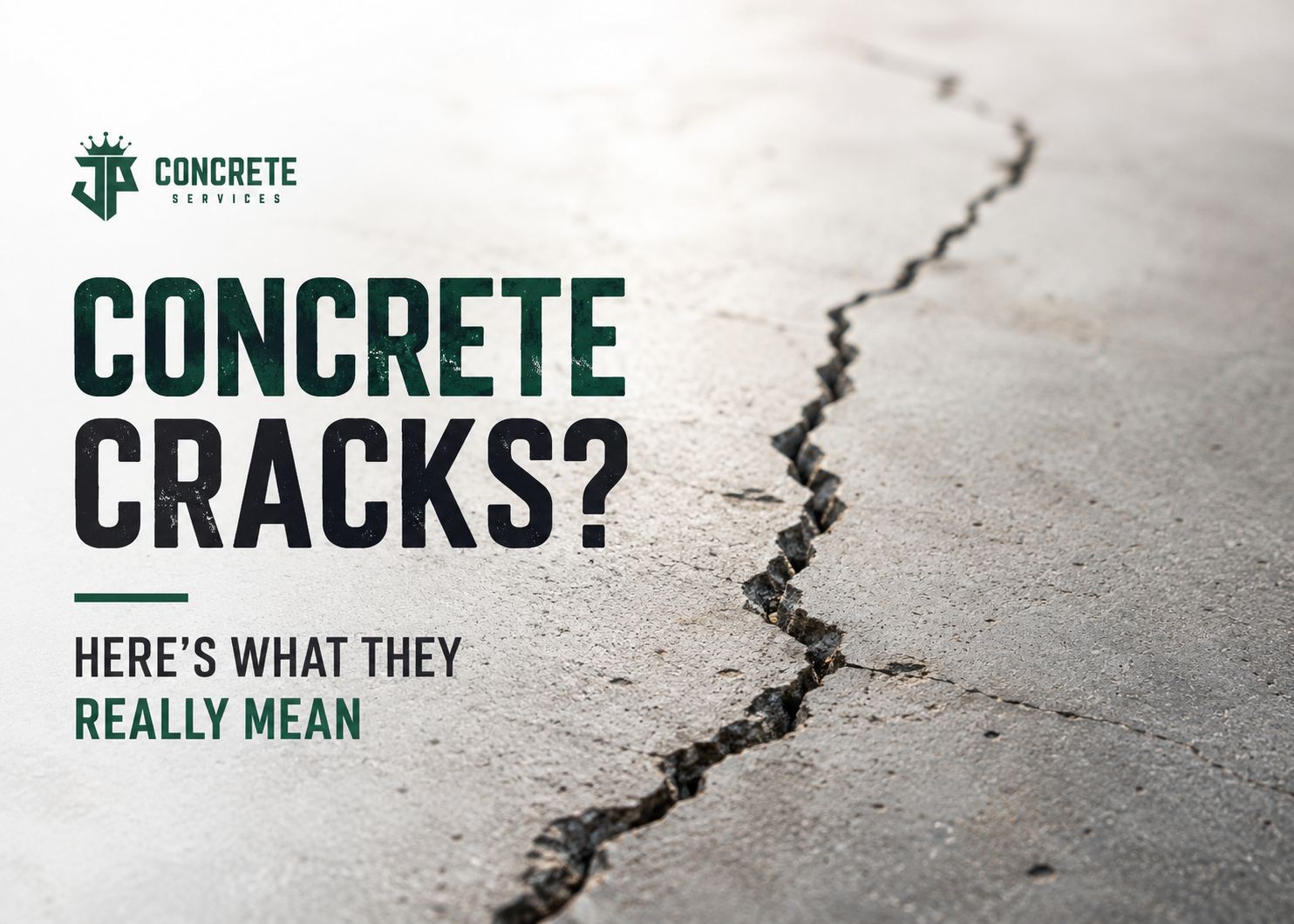
Concrete is one of the most durable building materials, widely used in homes, driveways, patios, and commercial structures. But even the strongest concrete can develop cracks over time. Seeing cracks in concrete can be alarming, but not all cracks indicate serious problems. Understanding the type, cause, and severity of concrete cracks can save you from unnecessary repairs or costly structural damage.
Why Concrete Cracks
Concrete cracks occur for several reasons, mostly due to its natural properties and environmental factors. Concrete is strong under compression but weak under tension. When it undergoes stress beyond its capacity, it may crack. Some common causes include:
- Shrinkage: Concrete shrinks as it dries and cures. This is a natural process, and minor shrinkage cracks are common.
- Temperature Changes: Expansion and contraction due to heat or cold can cause cracks.
- Settlement: If the ground beneath the concrete shifts or settles unevenly, cracks can appear.
- Overloading: Concrete is designed to bear a specific load. Excess weight can create cracks.
- Poor Installation: Incorrect mixing, inadequate curing, or lack of reinforcement can lead to cracking.
Understanding why your concrete cracked is the first step in deciding whether you need professional help.
Types of Concrete Cracks
Not all cracks are equal. They differ in appearance, cause, and severity. Recognizing the type of crack can help determine the best solution.
Hairline Cracks
Hairline cracks are very thin, often less than 1/16 inch wide. They usually appear due to normal shrinkage during curing. These cracks are mostly cosmetic and do not affect structural integrity.
Settlement Cracks
Settlement cracks occur when the soil beneath the concrete shifts or compacts unevenly. They are often wider at the top than the bottom and can continue to grow over time if the underlying soil problem isn’t addressed.
Structural Cracks
Structural cracks are serious and may compromise the safety of the structure. These cracks are typically wider than 1/4 inch and may appear in walls, foundations, or slabs under high stress. They often indicate poor design, overloading, or significant settling issues.
Thermal Cracks
Concrete expands in heat and contracts in cold. When there is a large temperature difference or insufficient expansion joints, thermal cracks can occur. These cracks are usually visible on surfaces exposed to sun or cold weather.
Control Joint Cracks
Control joints are intentional weak points created to control where cracks occur. Cracks along these joints are normal and indicate the concrete is behaving as expected.
How to Assess Concrete Cracks
Before taking action, it’s essential to assess the severity of the crack. Here’s how:
- Width: Cracks under 1/8 inch are usually minor. Cracks over 1/4 inch may require professional assessment.
- Direction: Vertical cracks are often less serious than horizontal or stair-step cracks in walls or foundations.
- Location: Cracks in load-bearing areas or near structural elements can indicate a bigger problem.
- Progression: Monitor if the crack grows over time. Rapid growth is a warning sign.
Keeping a simple notebook with measurements and photos of the crack can help track changes.
When Cracks Are Not Serious
Many concrete cracks are purely cosmetic and do not require expensive repairs. These include:
- Hairline cracks due to shrinkage
- Minor control joint cracks
- Surface cracks in patios or driveways that do not affect load-bearing capacity
For these cracks, simple cosmetic fixes like patching or sealing can restore the appearance and prevent moisture from penetrating.
When to Call a Professional
Some cracks indicate a deeper problem that needs professional attention. Contact a trusted concrete expert like JP Concrete LLC if you notice:
- Cracks wider than 1/4 inch
- Horizontal cracks in foundation walls
- Cracks accompanied by bulging, leaning, or water seepage
- Rapidly growing cracks
- Cracks in structural elements such as beams or load-bearing walls
Early intervention can prevent costly repairs and structural damage.
How to Fix Concrete Cracks
The method for repairing concrete cracks depends on their type and severity.
For Minor Cracks
- Concrete Patch: Use a ready-mix concrete patch or epoxy filler. Clean the crack, apply the material, and smooth it out.
- Sealing: For hairline cracks, a concrete sealer can protect against water infiltration and prevent dirt buildup.
For Moderate Cracks
- Epoxy Injection: This method fills the crack and restores structural integrity. It works well for cracks in floors, slabs, or walls.
- Polyurethane Foam: Ideal for cracks exposed to water, as it expands and seals the gap effectively.
For Severe Cracks
- Foundation Repair: For structural cracks in foundations, underpinning, or slab stabilization may be required.
- Professional Assessment: Major cracks should be evaluated by an engineer to determine the safest repair method.
Preventing Concrete Cracks
Prevention is always better than repair. Here are some tips:
- Proper Curing: Allow concrete to cure properly to minimize shrinkage cracks.
- Use Control Joints: Strategically placed joints reduce uncontrolled cracking.
- Quality Mix: Use the correct water-to-cement ratio and reinforcement.
- Soil Preparation: Ensure the ground is stable and compacted before pouring concrete.
- Limit Load: Avoid placing excessive weight on concrete surfaces.
Regular maintenance, including sealing and cleaning, also extends the life of concrete surfaces.
Why Choose JP Concrete LLC
At JP Concrete LLC, we combine experience, quality materials, and expert techniques to address all concrete issues. From minor hairline cracks to major structural repairs, our team ensures your concrete is durable, safe, and visually appealing. We focus on long-lasting solutions tailored to your specific needs.
Conclusion
Seeing cracks in your concrete can be worrying, but understanding what they really mean helps you respond appropriately. Most cracks are minor and cosmetic, but some indicate structural problems requiring professional attention. By assessing the type, size, and progression of cracks, you can decide the best approach for repair or prevention. Trust professionals like JP Concrete LLC for guidance, repair, and maintenance to keep your concrete strong and lasting for years.