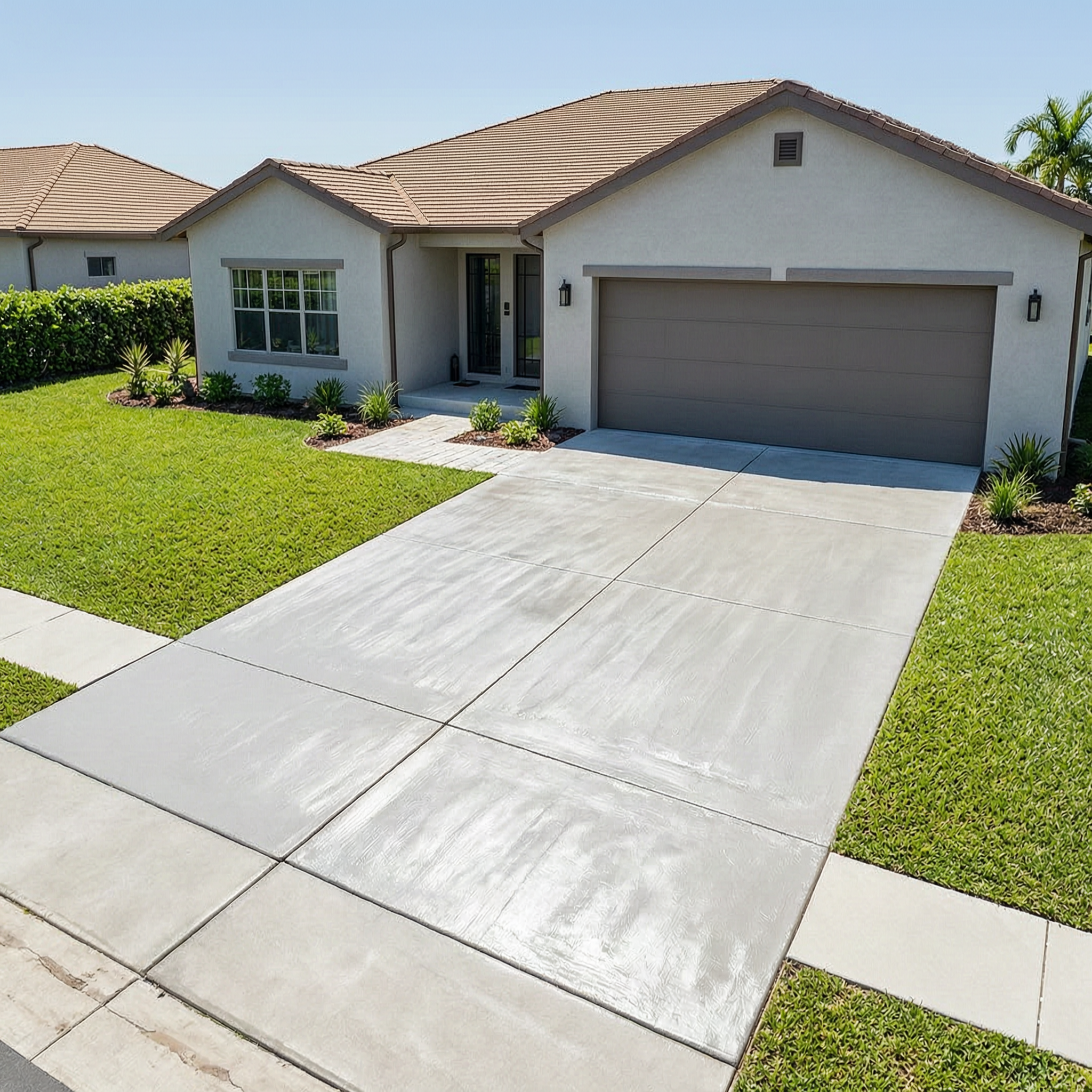
As we move into 2026, home improvement projects continue to be a priority for homeowners looking to boost curb appeal and property value. Among these projects, installing a new driveway remains one of the most impactful investments. Concrete is a leading choice due to its longevity and versatility, but budgeting requires up-to-date information. Understanding the current concrete driveway cost is the first step toward a successful renovation.
Material prices and labor rates have shifted slightly entering 2026, influenced by supply chain stability and regional demand. Whether you are replacing an old surface or building from scratch, this guide provides the latest financial breakdowns. We will explore standard pricing, decorative upgrades, and the key factors that influence your concrete driveway installation cost.
Average Concrete Driveway Cost in 2026
For 2026, the average cost to install a standard concrete driveway ranges between $6.50 and $13 per square foot. For a typical two-car driveway (approximately 600 square feet), total project costs generally fall between $3,900 and $7,800.
These figures represent a modest increase from previous years, reflecting adjustments in fuel surcharges for delivery and skilled labor rates. While the base concrete driveway cost is competitive, customization and site conditions can push the budget higher. It is crucial to obtain multiple quotes to understand the specific rates in your local market.
Key Factors Influencing Concrete Driveway Installation Cost
Several variables determine where your project falls within the price spectrum. Understanding these elements helps you manage expectations and allocate your budget effectively.
1. Driveway Dimensions and Thickness
The total square footage is the most obvious cost driver. However, the thickness of the slab is equally important. Standard residential driveways are typically 4 inches thick. If you intend to park heavier vehicles, such as trucks or RVs, a 5- to 6-inch thickness is recommended. This increase in volume directly impacts the concrete driveway installation cost due to additional material and base preparation requirements.
2. Site Preparation and Demolition
Existing surfaces must often be removed before new concrete can be poured. Demolition and disposal of old asphalt or concrete can add $2.50 to $6 per square foot to the project. Additionally, if your land requires significant grading to ensure proper water runoff, excavation costs will rise. Proper base preparation is non-negotiable for preventing future settling.
3. Regional Market Variations
Geographic location plays a major role in pricing. Urban centers with higher living costs typically see higher rates for materials and labor. Furthermore, transportation fees for ready-mix concrete trucks can vary based on the distance from the batching plant to your property.
Concrete Finishes and Pricing Tiers
The aesthetic finish you choose is one of the biggest variables in your budget. Here is how different styles compare in 2026.
Standard Gray Concrete
This is the most cost-effective option. It involves pouring a standard mix and finishing it with a non-slip broom texture.
- Estimated Cost: $6.50 – $10.50 per square foot.
- Best For: Homeowners prioritizing function and budget over aesthetics.
Stamped Concrete
Stamped concrete offers the look of high-end materials like cobblestone or slate without the associated maintenance.
- Estimated Cost: The stamped concrete driveway price typically ranges from $13 to $22 per square foot.
- Why Choose It: It significantly boosts curb appeal and can mimic more expensive paving options.
Colored and Stained Concrete
Adding integral colors or acid stains provides a custom look without the texture of stamping.
- Estimated Cost: $9 – $16 per square foot.
- Maintenance: Stained concrete may require more frequent resealing to maintain color vibrancy.
Labor Cost Concrete Driveway Breakdown
In 2026, skilled labor remains a significant portion of the overall budget. The labor cost concrete driveway projects require often accounts for 50% to 60% of the total expense. This covers forming, pouring, finishing, and curing management.
Why Professional Labor is Essential:
- Timing: Concrete has a limited working window before it sets. Professional crews ensure the pour is completed smoothly.
- Finishing Quality: Improper finishing can lead to surface scaling or poor drainage.
- Code Compliance: Professionals ensure the driveway meets local zoning and setback regulations.
Given the physical demands and technical skill required, DIY installation is rarely cost-effective for full-sized driveways. Mistakes can lead to costly repairs that exceed the initial savings.
Reinforcement Options for Durability
To maximize the lifespan of your driveway, reinforcement is highly recommended. These reinforcement options help control cracking and structural integrity.
- Wire Mesh: A grid of steel wire placed within the slab. Common for standard residential use.
- Rebar: Steel bars provide superior tensile strength, ideal for heavy loads or unstable soil.
- Fiber Mesh: Synthetic or steel fibers mixed directly into the concrete for internal reinforcement.
- Cost Impact: Adding reinforcement typically adds $0.75 to $2.00 per square foot. While this increases the upfront concrete driveway cost, it reduces the likelihood of expensive repairs later.
2026 Market Trends: Sustainability and Permeability
As we progress through 2026, homeowners are increasingly interested in sustainable paving solutions. Permeable concrete, which allows water to drain through the surface, is gaining popularity.
- Environmental Benefit: Reduces runoff and helps manage stormwater.
- Cost Consideration: Permeable concrete can be slightly more expensive than standard mixes due to specialized installation requirements.
- Incentives: Some municipalities offer rebates for eco-friendly paving, which can offset the initial concrete driveway installation cost.
Maintenance and Long-Term Value
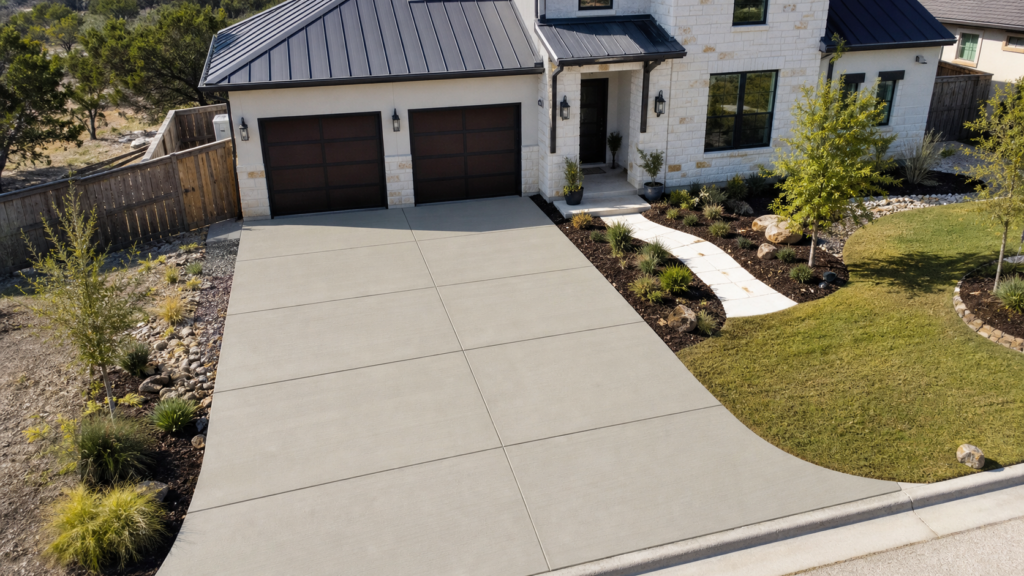
A concrete driveway is a long-term asset. With proper care, it can last 30 to 50 years. To protect your investment:
- Sealing: Apply a quality sealant every 2–3 years to protect against stains and freeze-thaw cycles.
- Cleaning: Regularly sweep debris and wash the surface to prevent dirt buildup.
- Crack Repair: Address small cracks immediately to prevent water infiltration and expansion.
Conclusion
Investing in a concrete driveway is a strategic decision that enhances both functionality and property value. In 2026, the concrete driveway cost remains competitive, offering a durable solution compared to asphalt or pavers. By understanding the variables—from labor cost concrete driveway requirements to reinforcement options you can plan a budget that aligns with your goals.
Whether you opt for a standard finish or explore the stamped concrete driveway price for a custom look, ensure you work with licensed contractors. A well-installed driveway not only serves your daily needs but also stands as a testament to your home’s quality for decades.
Frequently Asked Questions (FAQ)
Q: Has the concrete driveway cost increased in 2026?
A: Yes, there has been a slight increase due to inflation and labor rates. Expect prices to be 3-5% higher than 2024-2025 averages.
Q: Does the stamped concrete driveway price include sealing?
A: Not always. Some contractors include the initial seal in the quote, while others charge it separately. Always clarify this before signing.
Q: Which reinforcement options are best for cold climates?
A: In areas with freeze-thaw cycles, rebar or fiber mesh is highly recommended to prevent cracking caused by ground shifting.
Q: How does labor cost on concrete driveway projects affect the timeline?
A: Skilled labor ensures the job is done correctly in one pour. Rushing or using unskilled labor can lead to delays if the concrete sets improperly.
Q: Can I finance my concrete driveway installation cost?
A: Many contractors offer financing plans. Additionally, home equity lines of credit (HELOC) are common methods for funding large exterior improvements.