Driveway material is one of the significant factors of choice that determines how your property will appear, how durable it will be, and how much it will cost to maintain later. Concrete driveway vs asphalt driveways are the two most popular driveway materials, but have advantages and disadvantages depending on how much you have, the weather in which you are constructing it, and even how you intend to maintain it. They are both good drivers with a good driving surface; however, they differ greatly in other ways, such as life, maintenance, and value. In JP Concrete, homeowners get professional advice and quality installation to enable them to decide the best system to be used in their property. Knowing the contrasts between concrete driveways and asphalt may enable you to make a wise long-term investment.
Concrete Driveway vs Asphalt: Understanding the Key Differences
Durability is one of the foremost aspects that homeowners might put into consideration when they think of having a concrete or asphalt driveway. Both are excellent materials, but their lifespan, repairing, and withering are different.
The appropriate choice will be made in accordance with your needs in your property and with your plans.
What Material is Durable?
When well-installed and maintained, concrete lasts longer than asphalt.
On average:
- The concrete driveway lasts up to 30-40 years and more.
- Driveways that are made of asphalt can last up to 15-25 years under normal maintenance.
Installation and its routine upkeep are also important determinants of the maximum life of either material.
Maintenance Requirements
Maintenance needs of concrete and asphalt are extremely different.
Concrete usually requires:
- Occasional cleaning
- Joint sealing
- Minor crack repairs
Asphalt often requires:
- Regular sealcoating
- Crack filling
- Surface repairs
- Reduced maintenance with time.
With knowledge of the driveway maintenance cost, homeowners can make long-term calculations of the value of each option rather than basing them on the initial cost of installation.
Heat Absorption and Climate Performance
Climate may be the determinant of a better-performing driveway material.
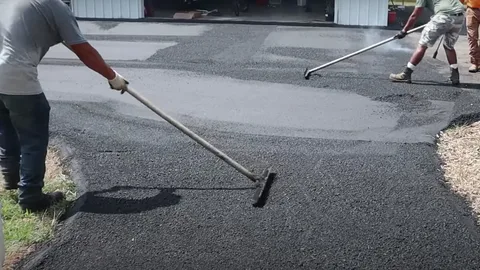
In a comparison between asphalt and heat-absorption concrete, asphalt retains more heat since it has a dark surface. This makes it hotter in hot weather and can lead to softening in exceedingly hot weather.
The reflections of the sun are much more in the concrete material; thus, they not only remain cool in summer when it is hot, but it is also more resistant to the influence of heat, deforming the surface.
Durability Under Heavy Use
Both materials have the capability of supporting normal residential vehicle traffic. Concrete normally works better with heavy loads over a long duration.
Concrete driveways are also very preferred since they can resist ruts, deformations, and wear out, which can be ensured by making sure that it is installed properly.
Appearance and Curb Appeal
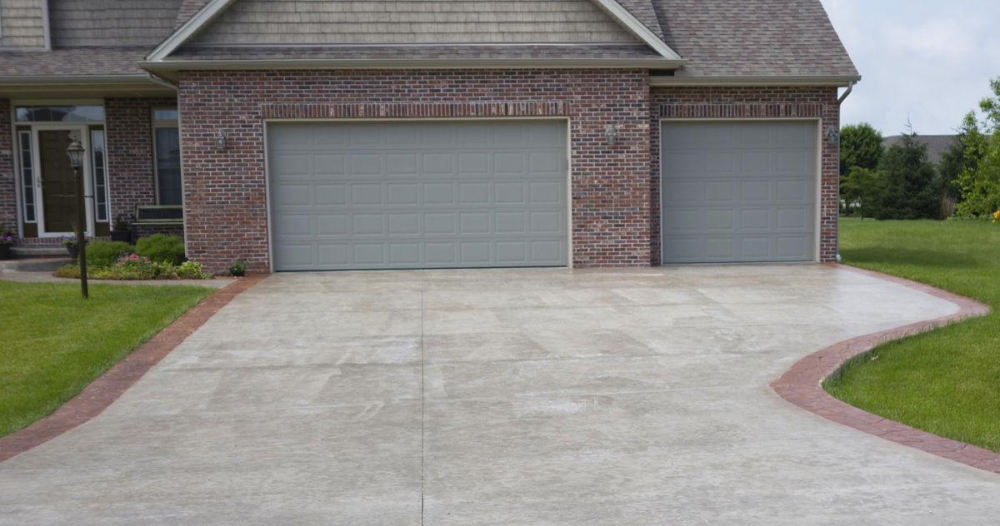
Concrete is more flexible with regard to design than asphalt.
The homeowners can choose to do as follows:
- Decorative finishes
- Stamped concrete
- Colored concrete
- Exposed aggregate
- Smooth finishes
All these options allow concrete driveways to blend with many other types of architecture and enhance the ornamentation of curbs.
Repair Considerations
Minor asphalt repairs are sometimes less costly and faster compared to concrete repairs.
Nevertheless, the number of repairs that concrete will have during its working period is often less as the material is more durable. It may be more complicated to repair broken-off concrete parts, but there can be fewer regularly scheduled maintenance.
Long-Term Value
Nonetheless, although concrete might be more expensive to install in the short run, the tool can be less expensive to install, last longer, and have less maintenance, which is more cost-effective in the long-run.
Concrete may prove to be the less expensive investment in the long run for those homeowners who have no plans of selling their homes in the near future.
Why Professional Installation Matters
Whether concrete or asphalt, it is necessary that proper installation be done by professionals to ensure a long life.
Experienced contractors ensure:
- Proper site preparation
- Correct grading
- Stable base installation
- Quality materials
Proper finishing techniques
Professional workmanship contributes greatly to higher durability and minimizes maintenance problems in the future.
Conclusion
Whether to have a concrete driveway or asphalt is a question that is dependent on your budget and expectations in regard to maintenance and your long-term expectations. Asphalt may be the cheaper option in the short term, though concrete has a higher percentage of long-term reduced maintenance and a wider design option. The consideration of issues like maintenance cost, driveway needs, and the performance of heat-absorption concrete as opposed to asphalt can enable homeowners to make an informed choice. JP Concrete offers a quality service installing a driveway, which will be both attractive and clean to capture value and longevity for your property.
FAQs
1. Which is more long-lasting, a concrete driveway or asphalt?
The concrete will last 30-40 or more years due to maintenance, and the asphalt lasts 15-25 years due to maintenance.
2. Which is the driveway that is not in the best condition?
Concrete typically requires a lesser routine maintenance compared to asphalt, which requires routine sealcoating and cracking.
3. Does asphalt have a higher heat absorption than concrete?
Yes. In a warm climate, concrete tends to be cooler than asphalt as the former holds more heat because it is darker.
4. Is concrete more expensive than asphalt?
Concrete is normally more costly to install in the short run, but it has a long life, which could be valuable in the long run.
5. What is the significance of having professional driveway installation?
Professional installation ensures good preparation, drainage, and construction, which would ensure that the life cycle and life of your driveway are maximized.