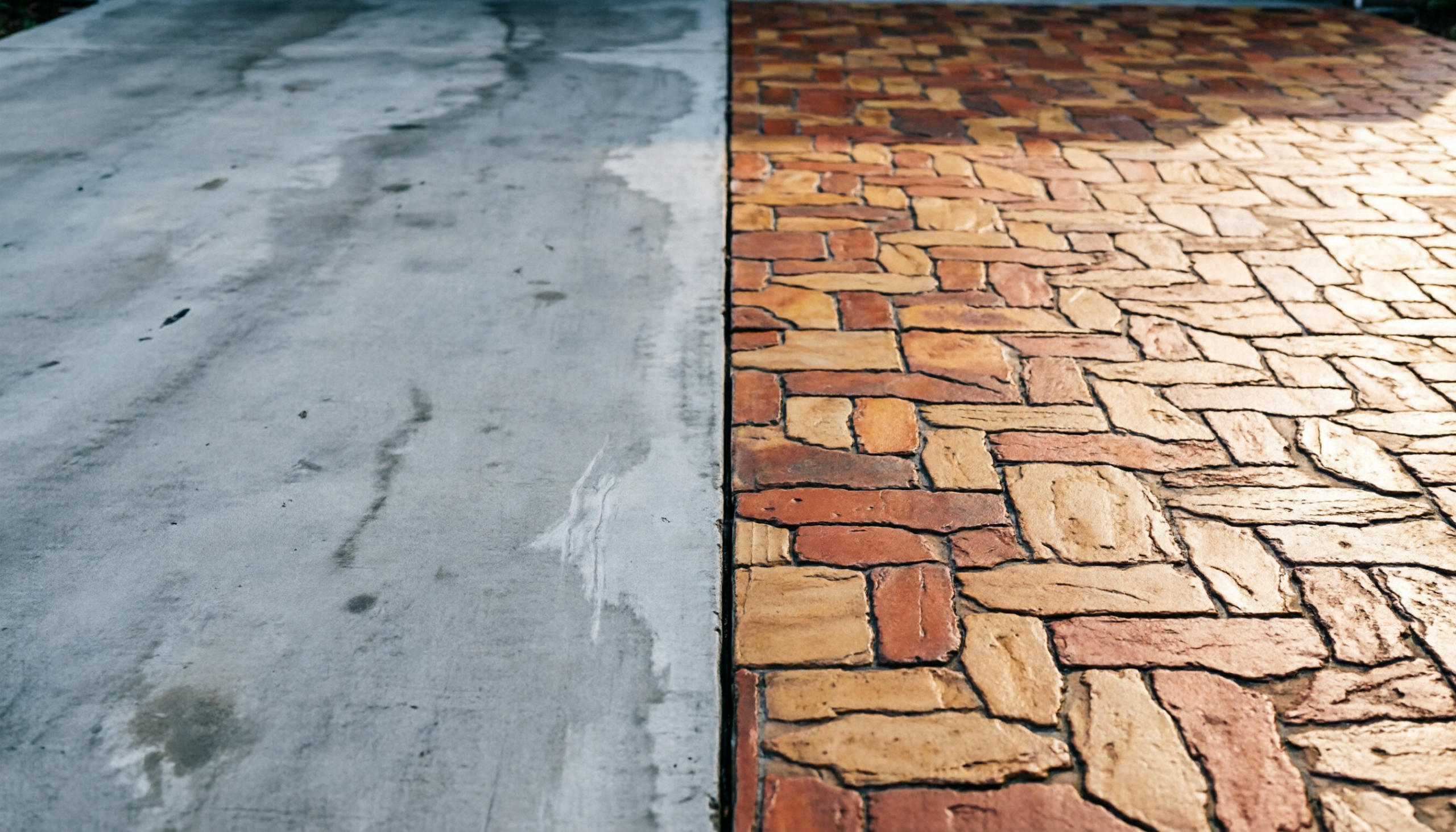
When it’s time to pour a new patio, driveway, or walkway, one of the first decisions you’ll face is whether to go with stamped concrete or regular concrete. Both are durable, long-lasting options, but they differ significantly in appearance, cost, and upkeep. Understanding these differences will help you choose the right material for your budget, style, and how you plan to use the space.
What Is Regular Concrete?
Regular concrete, sometimes called standard or plain concrete, is a mixture of cement, sand, aggregate, and water poured into forms and left to cure into a flat, uniform surface. It’s typically finished with a broom, trowel, or simple texture to provide a bit of grip, but it doesn’t include any decorative patterning. Regular concrete is the go-to choice for functional surfaces like garage floors, sidewalks, and basic driveways where appearance is secondary to durability and cost.
What Is Stamped Concrete?
Stamped concrete starts with the same basic concrete mix, but before it fully cures, it’s pressed with patterned stamps to mimic the look of natural materials like flagstone, brick, slate, or even wood planking. Color hardeners and release agents are often added during the process to enhance the texture and create realistic shading. The result is a surface that has the visual appeal of premium materials at a lower cost than installing the real thing.
Cost Comparison
Cost is usually the deciding factor for many homeowners, and there’s a meaningful gap between the two options.
Regular concrete is the more budget-friendly choice. Because it requires less labor, fewer materials, and no specialized stamping tools, it generally costs less per square foot to install. It’s a practical option if you’re working with a tight budget or covering a large area, such as a long driveway.
Stamped concrete costs more, often considerably more, because of the additional labor, color hardeners, sealers, and stamping mats involved. The exact price gap depends on the complexity of the pattern and the size of the project, but homeowners should expect to pay a noticeable premium for the decorative finish.
Appearance and Design Options
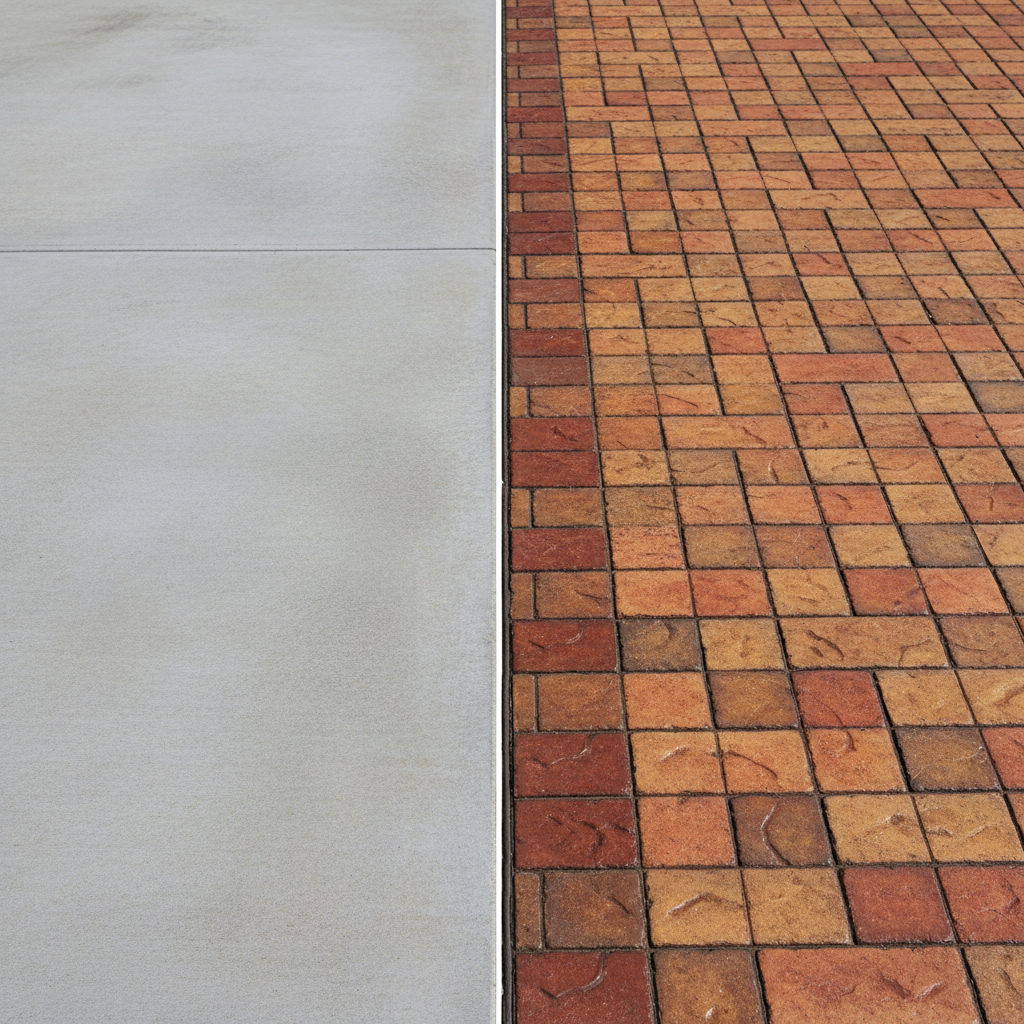
This is where stamped concrete clearly outshines its plain counterpart. Regular concrete offers a clean, simple, utilitarian look. It can be tinted or lightly textured, but it won’t replicate the appearance of natural stone or brick.
Stamped concrete, on the other hand, offers extensive design flexibility. You can choose from dozens of patterns and color combinations to match your home’s exterior, complement a garden design, or create a custom look for a pool deck or patio. If curb appeal and aesthetics are a priority, stamped concrete gives you far more creative control.
Durability and Lifespan
Both options are durable when installed correctly, but they have some differences worth noting.
Regular concrete is known for its straightforward strength and resilience. Without decorative texturing, there are fewer surface details that could wear down or fade over time, which can make it slightly more forgiving in extreme weather conditions or high-traffic areas.
Stamped concrete is also durable, but its decorative surface requires a quality sealer to protect the pattern and color from fading, especially in areas with intense sun exposure or frequent freeze-thaw cycles. When properly sealed and maintained, stamped concrete can last just as long as regular concrete, but it’s more sensitive to the elements if upkeep is neglected.
Maintenance Requirements
Regular concrete is relatively low-maintenance. Occasional sealing can help prevent staining and cracking, but it’s not as critical as it is for stamped concrete. Cleaning typically just involves sweeping and the occasional power wash.
Stamped concrete requires more consistent care. The sealer needs to be reapplied every few years to maintain its color and protect against moisture penetration. Skipping this maintenance can lead to fading, surface erosion, or cracking along the stamped grooves. If you’re not prepared for this added upkeep, regular concrete may be the more practical long-term choice.
Installation Considerations
Regular concrete installation is fairly straightforward and quicker to complete, which can also reduce labor costs. It’s also more forgiving of minor inconsistencies since there’s no intricate pattern to align.
Installing stamped concrete requires more skill and precision. The concrete must be stamped while it’s at the right consistency, which means timing is critical. An inexperienced contractor can end up with uneven patterns, visible seams, or inconsistent coloring, so it’s especially important to hire a contractor experienced specifically in decorative concrete work.
Resale Value and Curb Appeal
If you’re considering resale value, stamped concrete often gives a stronger visual first impression, which can make a property more appealing to potential buyers, particularly for a backyard patio or a front walkway. That said, the value it adds depends on your local market and how well the work was executed. Regular concrete won’t provide the same wow factor, but it’s a safe, neutral choice that won’t detract from a home’s value either.
Which One Should You Choose?
The right choice comes down to your priorities:
Choose regular concrete if you want a budget-friendly, low-maintenance, functional surface, especially for large areas like driveways or utility spaces where appearance isn’t the top concern.
Choose stamped concrete if you want a decorative, customizable surface that elevates curb appeal for a patio, pool deck, or walkway, and you’re willing to invest in the higher upfront cost and ongoing maintenance.
Final Thoughts
Both stamped and regular concrete are solid, long-lasting options, but they serve different purposes. Regular concrete prioritizes affordability and simplicity, while stamped concrete prioritizes style and visual impact. Weigh your budget, the purpose of the space, and how much maintenance you’re willing to commit to before making your final decision. When in doubt, consulting with a local concrete contractor can help you get a clearer picture of costs and options specific to your project. Get to Know More
Frequently Asked Questions
Q: Is stamped concrete more slippery than regular concrete?
A: It can be. Stamped concrete often has a smoother finish, which can be slick when wet. However, adding a non-slip additive to the sealant can mitigate this risk.
Q: Does stamped concrete crack more easily than regular concrete?
A: No. Both types are susceptible to cracking due to soil movement or temperature changes. Proper reinforcement options like rebar or wire mesh are essential for both.
Q: How often does stamped concrete need to be sealed?
A: To maintain the color and protection, stamped concrete should be resealed every 2 to 3 years. Regular concrete can go longer between sealings.
Q: Can you change the color of regular concrete later?
A: Yes, you can apply concrete stains or paints to regular concrete later, but it is often more cost-effective to choose colored or stamped concrete during the initial installation process.
Q: Which option adds more value to a home?
A: Stamped concrete generally adds more perceived value due to its high-end appearance, potentially increasing curb appeal and buyer interest.